Inspire
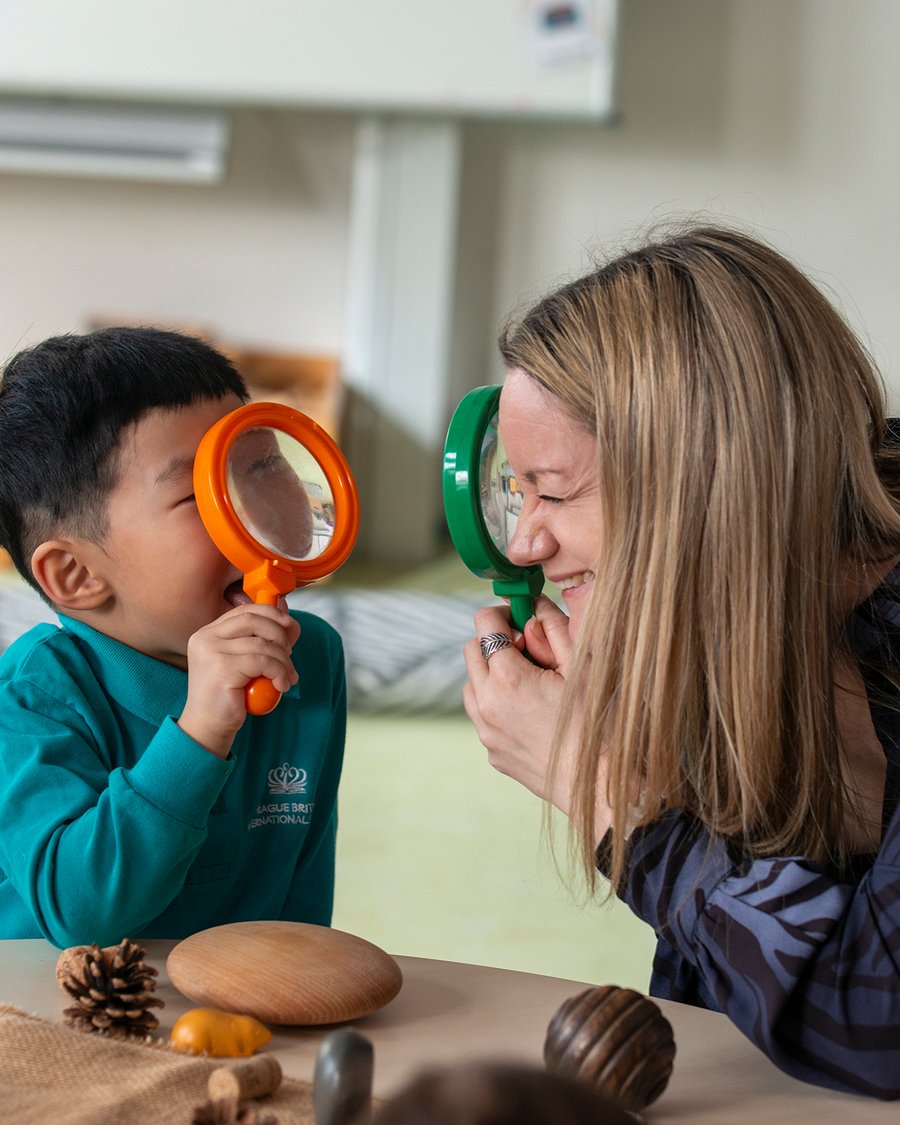
We believe curiosity is one of the strongest drivers of learning. That is why we make learning meaningful, encouraging children to ask questions, explore new ideas and discover what excites them.
Our philosophy
At PBIS, we believe education is not simply about passing on knowledge. It is about creating an environment that helps children grow, develop confidence and prepare for life. Our philosophy rests on three ideas — inspire, enrich and empower — that shape every ordinary school day.
One school · 60+ nationalities
We believe curiosity is one of the strongest drivers of learning. That is why we make learning meaningful, encouraging children to ask questions, explore new ideas and discover what excites them.
School is more than a building. It is a community. We create an environment where children feel they belong, where they feel safe, and where they are surrounded by experiences that broaden their view of the world.
Every child has their own pace, strengths and potential. We support students to grow step by step, build self-confidence and learn to take opportunities with courage.
Together, these three ideas create a school environment where children do more than study. They grow, flourish and begin to understand who they can become.
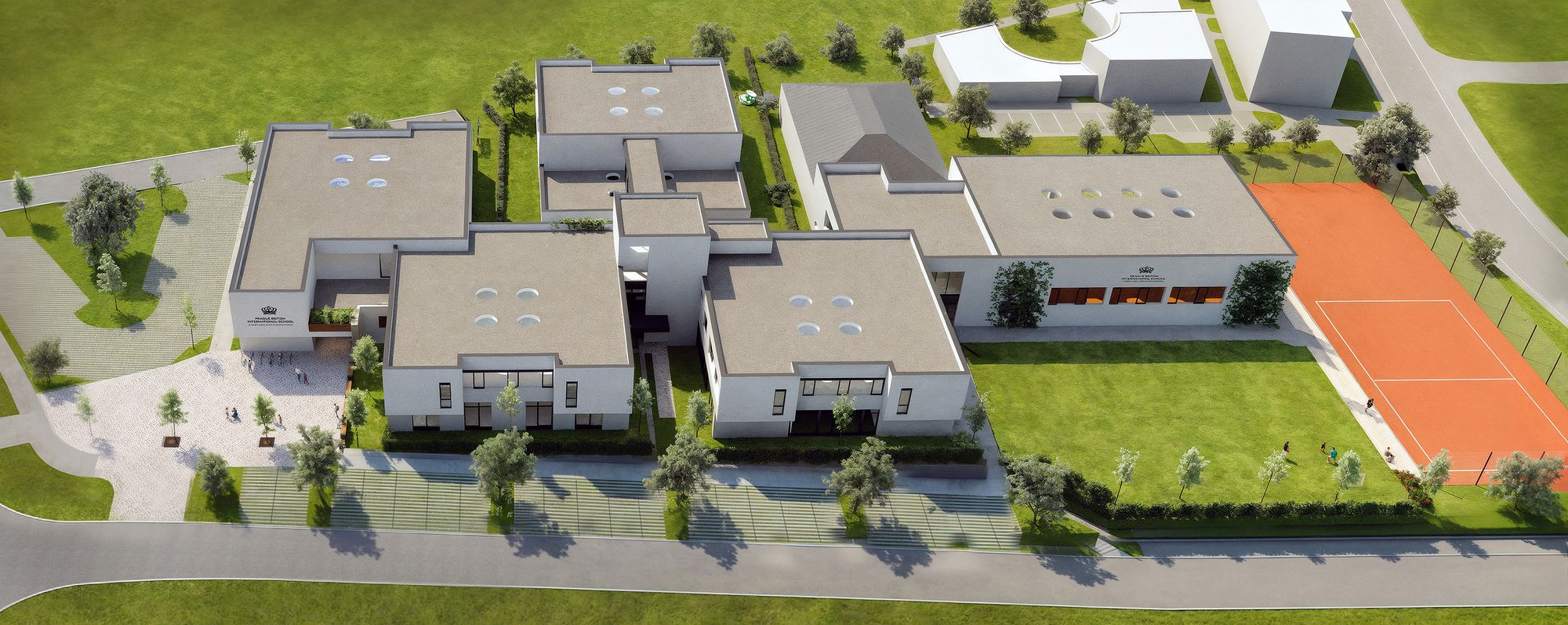
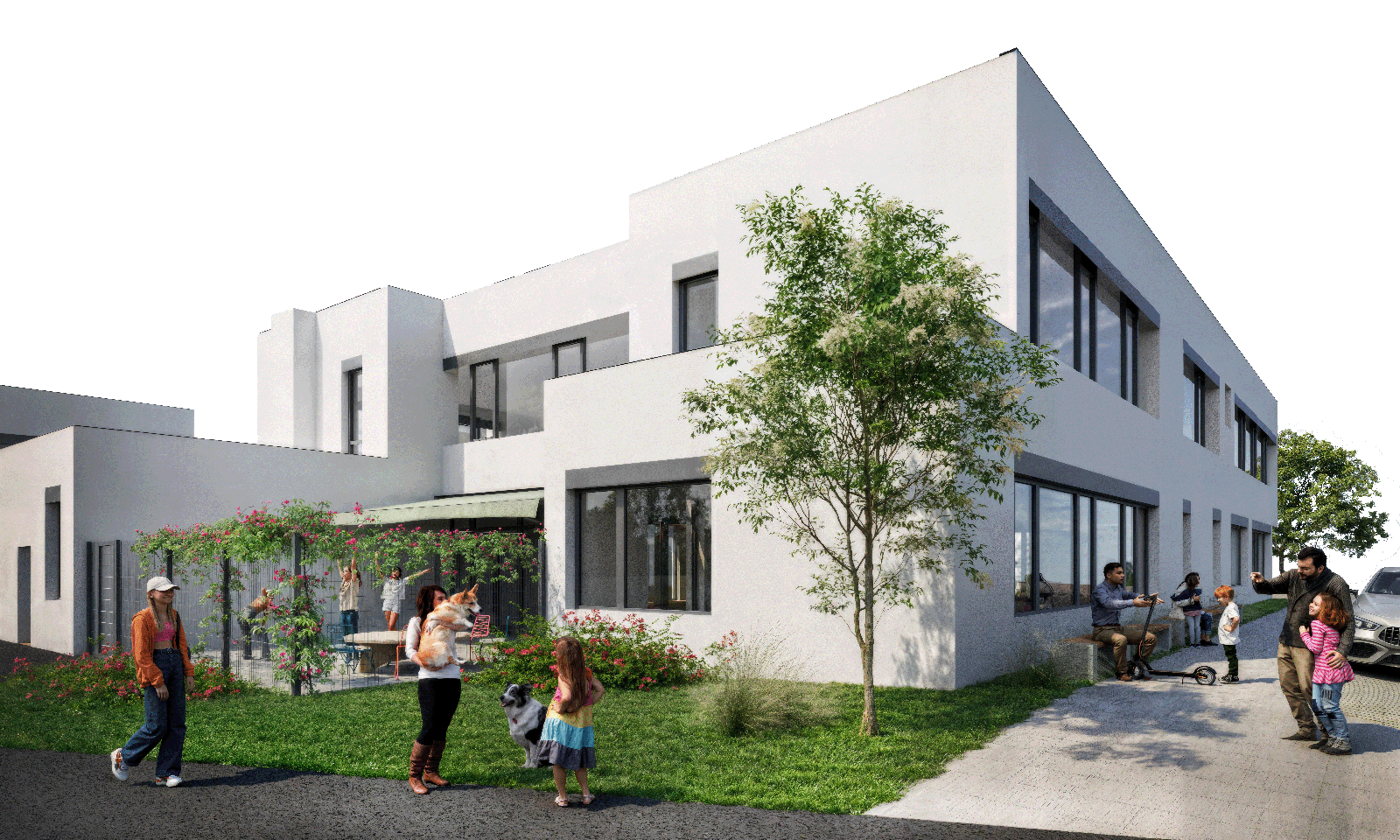
Our Prokop Campus is rising from an empty field in Prague 13 – Řeporyje: a purpose-built home for Early Years and Primary children, in a quiet, green, family-friendly neighbourhood a short walk from Stodůlky metro.
Choose your stage
Children join us as toddlers and leave as graduates. Choose the stage your child is in now and see what a week there looks like.
First steps into English, first friendships, and learning through play in a calm, familiar room.
Learn more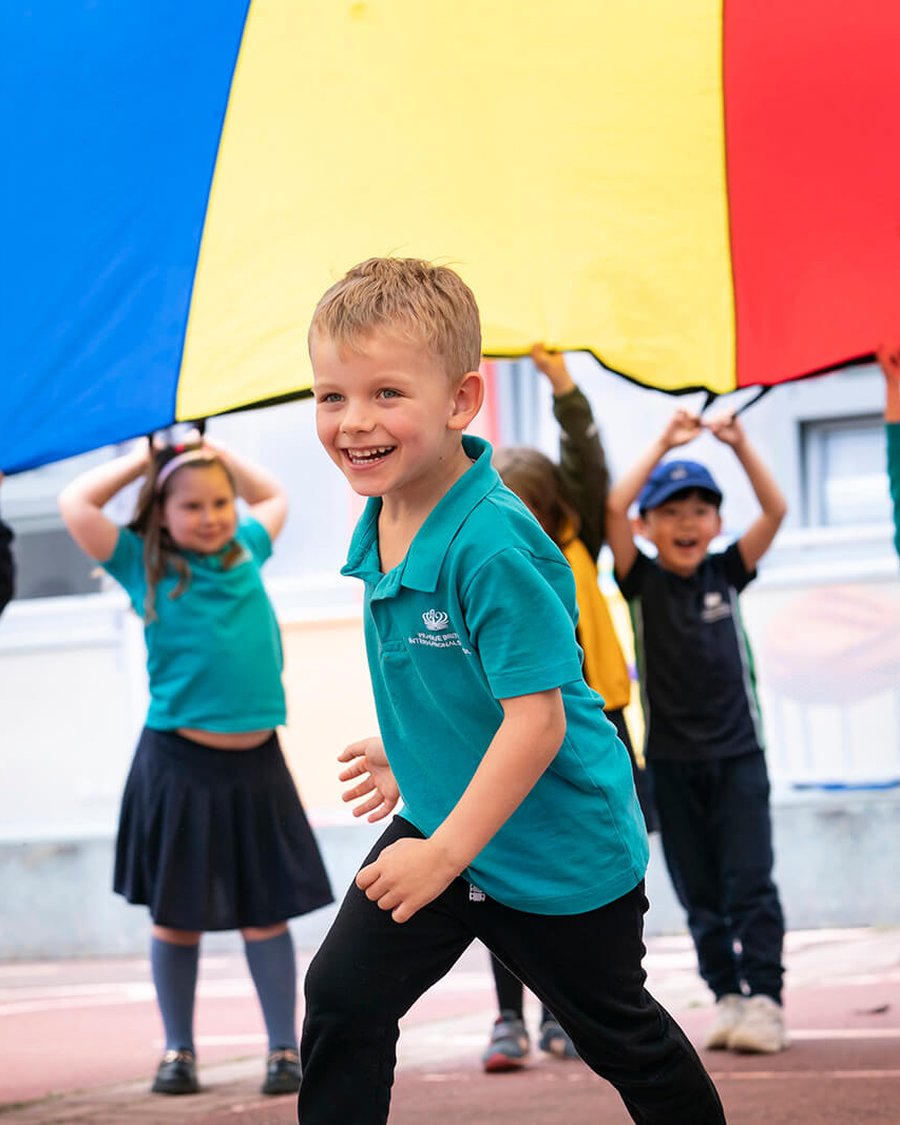
Reading, numbers and curiosity, taught by teachers who know every child by name.
Learn more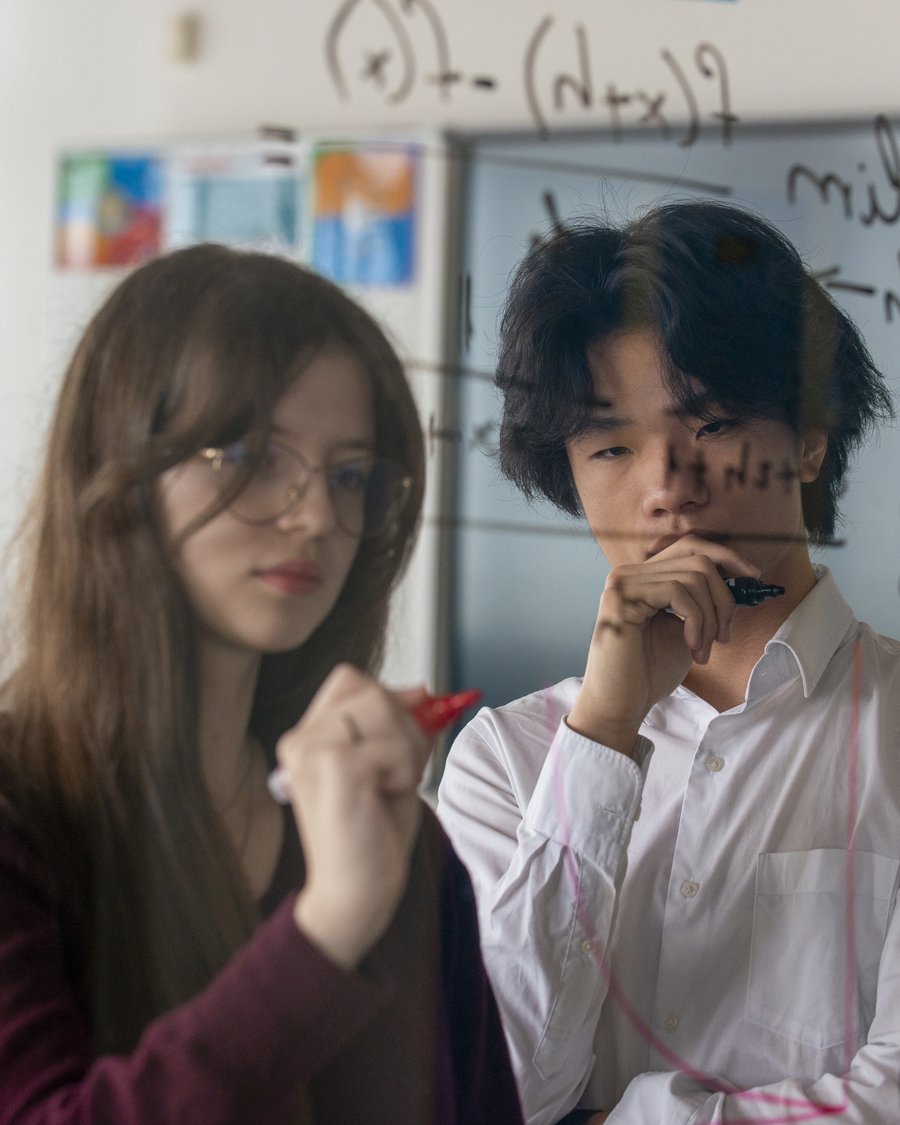
Subjects get serious and so does independence, all the way through to the IGCSE exams.
Learn more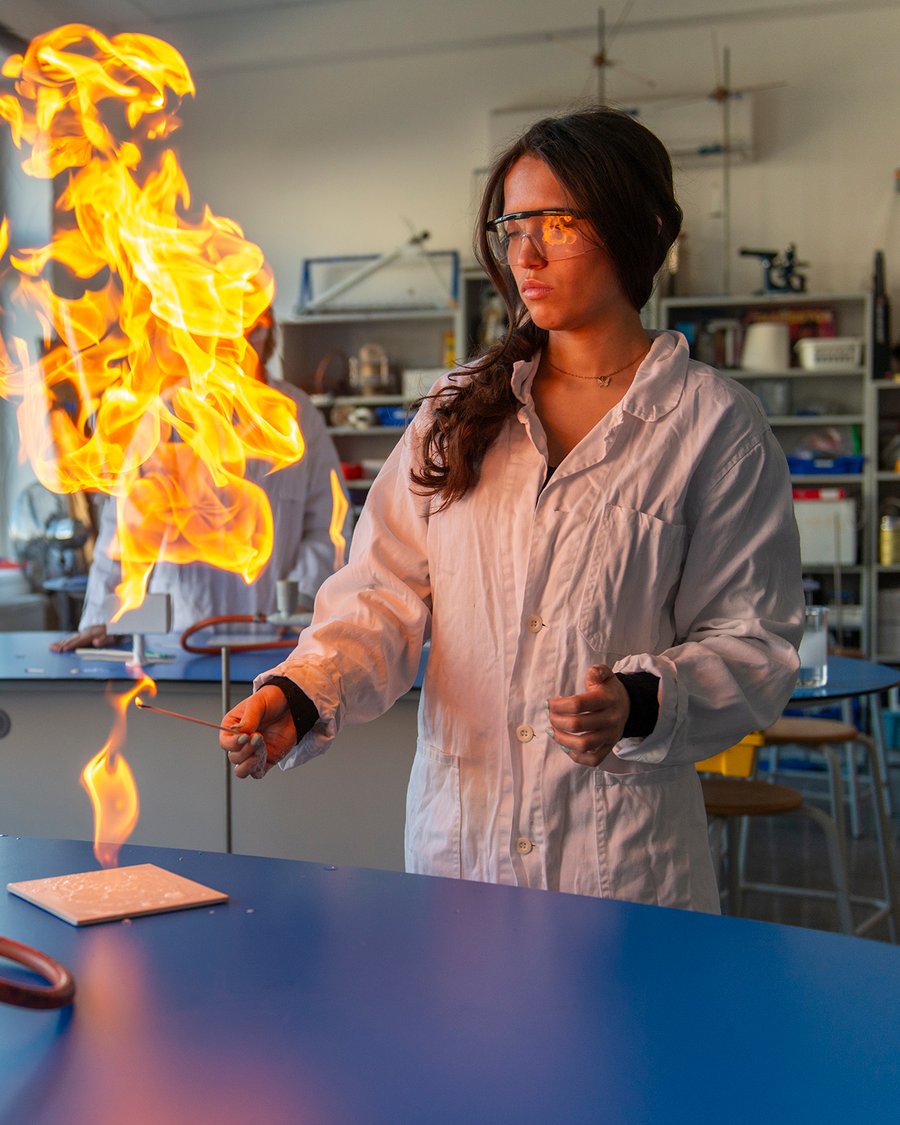
Two final years of real research and independent thinking, and applications to universities around the world.
Learn more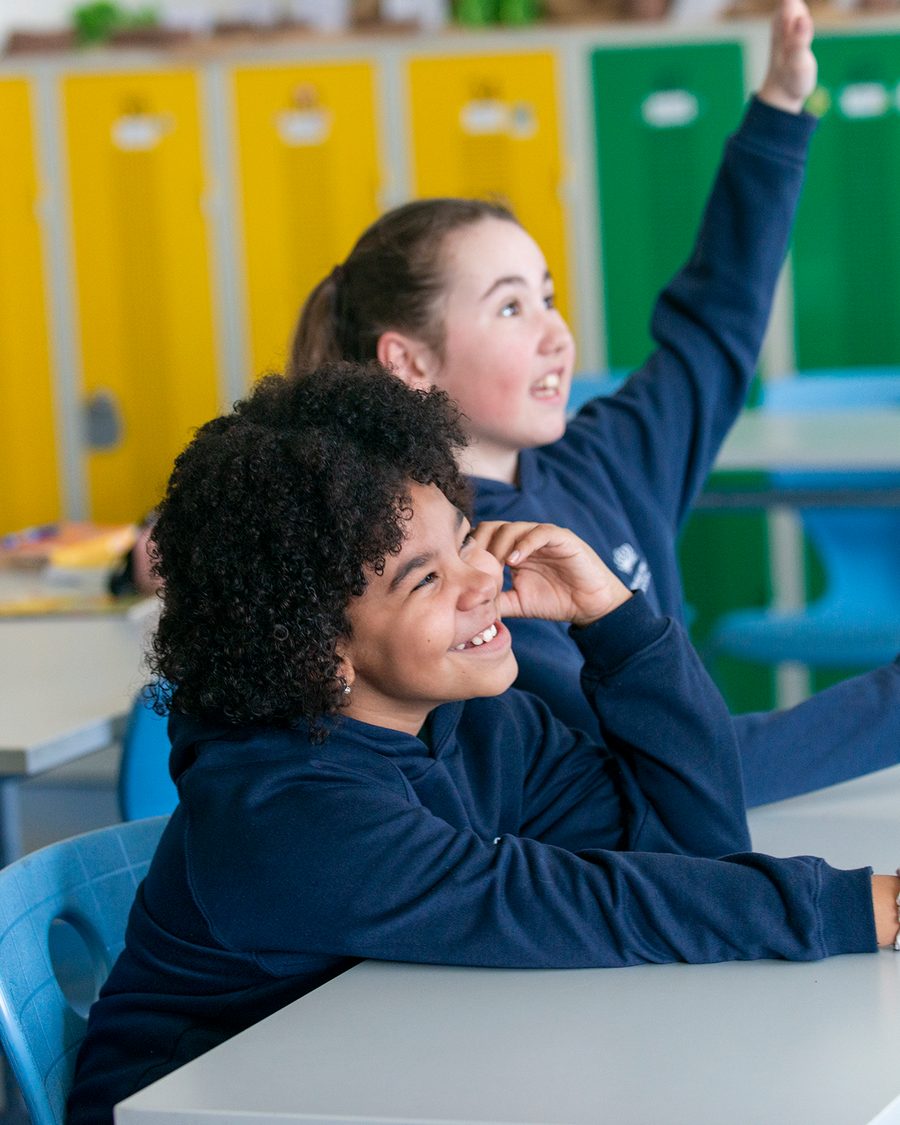
The Czech national curriculum taught alongside our British programme, for families who want their child to keep both languages and both school systems.
Learn moreBook your visit
The best way to know whether a school fits your child is to walk through it while the lessons are running. Choose a campus and a time, and we will plan the visit around your child’s age.
Someone from our admissions team will be in touch within two working days to agree a date and time that suits you.
Student stories
The clearest picture of a school is not in its results, but in what its students end up building for themselves. Here are two of them, in their own words.
 IB Diploma · STEAM
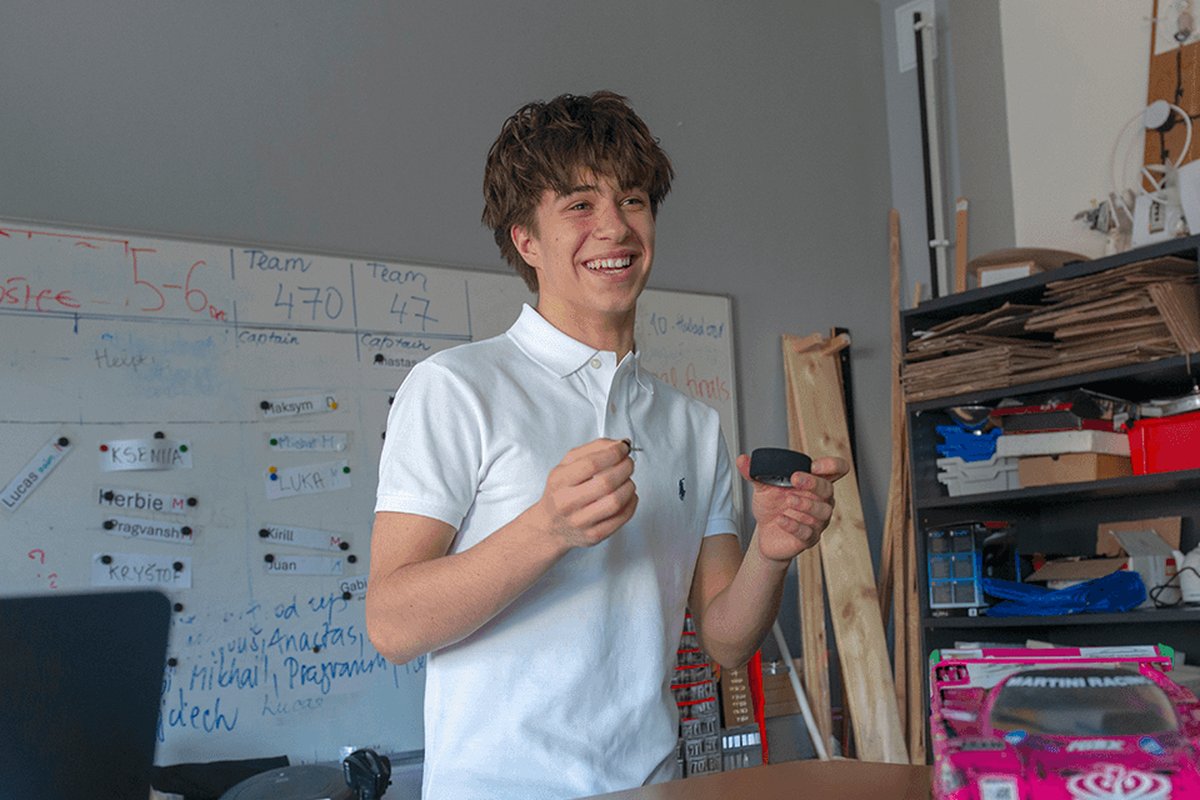
Anastas joined the STEAM club for the simplest of reasons — he had to choose an extracurricular. The team before him had graduated, leaving behind a hydrogen car and one instruction: do whatever you want with it.
I took everything apart, and then told myself I didn’t know how to put it back together.
A week before the race, he put it back together anyway. Three years on, he has redesigned the chassis, taught himself 3D design and led the team to first place in the modified car category at the Košice Hydrogen Cup 2026.
Anastas has been a part of PBIS since 1st grade. Today, as a 12th grader, he is known for his technical commitment and leadership skills as part of the school’s hydrogen car project. But his journey to engineering didn’t start with a clear plan.
It started almost by accident. About three years ago, Anastas joined the STEAM club simply because he needed to pick an extracurricular activity. What started as a reluctant decision quickly turned into one of the most remarkable engineering journeys led by students at PBIS. Today, he plays a central role in the development of the PBIS hydrogen car – redesigning mechanical components, experimenting with new technologies and helping to lead a team that recently won 1st place in the modified car category at the Košice Hydrogen Cup 2026.
Although Anastas has been involved in PBIS since the beginning of his school career, he first encountered the hydrogen car project in the 10th grade. His physics teacher introduced him to the club and suggested that he give it a try. At the time, Anastas had very little knowledge about hydrogen-powered vehicles. “I thought, why not?” he recalls. “I need to join a club anyway.” He had always enjoyed cars, especially Formula 1, but their construction and engineering were something completely new to him. When he joined the club, the previous team had just graduated and left the car at home. The message he received was simple: Here’s the car. Do whatever you want with it. “I didn’t know how it worked,” he says. “I took everything apart and then told myself I didn’t know how to put it back together.”
The project was in limbo for a while. Then the deadline came. A week before the race, Anastas’s teacher told him that the car had to be ready in time for the race. With little experience but great determination, he began putting the parts back together. Somehow, the car worked. During that race, however, Anastas noticed something that completely changed his approach. The team was falling behind. “I’m very competitive,” he explains. “When I saw that we were behind the others, I knew we had to improve.” From that point on, the project became much more than just a club activity.
Much of Anastas’ technical knowledge was built through experimentation and self-study. He studied how race cars are set up for different tracks and discovered that each track required a different configuration for optimal performance. Over time, he developed strong skills in mechanics, chassis design, and performance tuning. He also began working with 3D design and 3D printing software, eventually buying his own 3D printer to create custom components for the car. “I’m most proud of the mechanical side of the car, the chassis,” he says. Not every experiment worked. One of his most ambitious attempts was to design his own electronic control system for a hydrogen fuel cell. It failed miserably. “I burned it a few times,” he admits. “I even blew it up once. Electronics is definitely not my strong suit.” But even that became part of the learning process.
As the project grew, Anastas realized that one person couldn’t improve the car. He began to organize the team more systematically, creating different areas of responsibility within the club. This structure of students is largely focused on specific tasks while also collaborating on the development of the car. Trust in the team has become one of the most valuable outcomes. “A project works best when people are genuinely interested and committed,” they explain.
As the hydrogen car project developed, the school began to provide more and more support. Teachers and school administrators helped with funding, materials, and logistical support. One of the strongest sources of encouragement was the school staff, who believed in the long-term potential of the project. “They always believed we could improve,” says Anastas. What makes PBIS unique, he says, is the degree of independence the students are given. Many of the competitions feature other teams from specialized automotive schools, where teachers manage the technical work. At PBIS, the approach is different. Teachers coordinate logistics and support the project, but the design, experimentation, and technical decisions remain largely in the hands of the students. This freedom allows creativity and innovation to flourish.
During the competitions, Anastas also began to learn from teams from all over Europe. Czech teams are among the strongest in the world and provided valuable insights into chassis design with optimal performance. A Slovak team helped him better understand the hydrogen fuel cell system. Beyond student teams, he also began building connections with industry professionals. He reached out to companies internationally, forming contacts with specialists who helped manufacture parts for the car, including custom carbon-fiber chassis components produced using CNC milling technology. These connections significantly advanced the team’s technical capabilities.
One of Anastas’s most memorable experiences came during a race hosted at PBIS earlier this year. For the first time, he saw one of the leading teams, usually dominant in competitions, begin to worry that PBIS might overtake them. Watching the car perform exactly as designed, perfectly balanced in corners and operating at its limits, was deeply rewarding. “It behaved exactly how I expected it to,” he recalls. Moments like this confirmed that years of experimentation and persistence had paid off.
Before joining the Hydrogen Car club, Anastas had not seriously considered what he wanted to study at university. Now, his direction is much clearer. He hopes to pursue engineering at a university that participates in Formula Student, an international competition where students design and build full-scale racing cars. In many ways, the Hydrogen Car project introduced him to that possibility.
Looking back, Anastas believes the Hydrogen Car club at PBIS offers much more than technical experience. For students willing to invest time and energy, it provides an opportunity to explore engineering, develop leadership skills, and build connections far beyond the classroom. “It’s a place where dedication really matters,” he says.
At PBIS, projects like the Hydrogen Car club show how curiosity, persistence, and the freedom to experiment can turn a simple extracurricular activity into a defining educational experience.
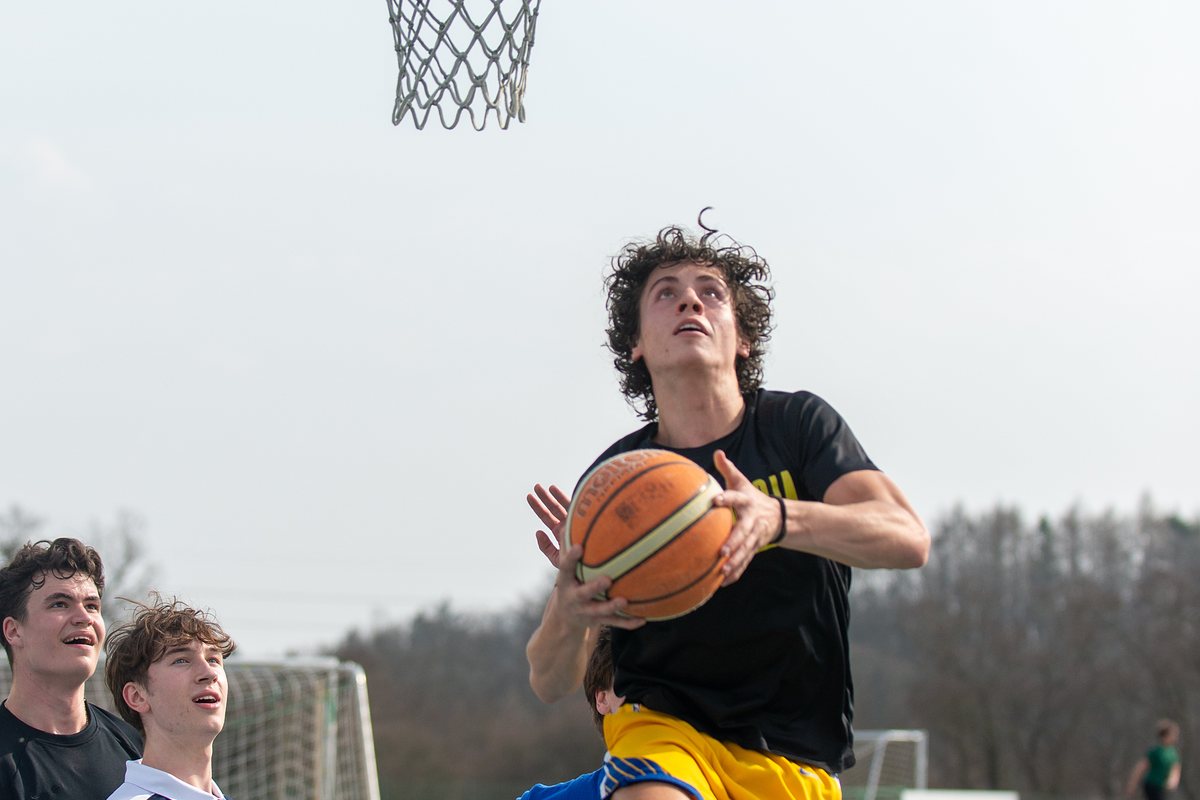 IB Diploma · Sport
Tom arrived at PBIS at three years old and picked up a basketball at twelve, alongside competitive skiing. For years he carried both, until an injury made the choice for him. What changed his game was not training harder, but listening.
To improve, I had to let go of my ego. I had to listen to players who were better than me.
He now trains with Sokol Vyšehrad and is preparing for college basketball in the United States — while running sessions for younger players at school, so they can see what is possible.
Tom’s story reflects what long-term development at PBIS can look like when curiosity meets commitment. Having joined the school at just three years old, his journey is shaped not by a single breakthrough moment, but by years of gradual growth, support, and personal determination. Today, Tom is preparing to continue his basketball career at college level in the United States.
Tom’s earliest memories of PBIS are not about performance or achievement. They are about community. He remembers a small, close-knit environment where relationships formed naturally and where school felt like a place of belonging. “It was a small community,” he recalls. “I remember mostly just playing with friends.” That sense of connection remained a constant throughout his time at PBIS and later became an important foundation for his development both as a student and as an athlete.
Basketball entered Tom’s life relatively late. He started playing in Year 7, at the age of 12, while still pursuing competitive skiing. At first, basketball was simply an interest – something he explored alongside other activities. What drew him in was the energy of the sport and the influence of professional players. Watching athletes like Steph Curry sparked a deeper connection. “I just found passion in it,” he says.
For several years, Tom balanced both skiing and basketball. Eventually, that balance became unsustainable. Skiing began to feel repetitive, and after experiencing an injury, he faced a decision. He chose basketball. “That was the moment I decided to fully commit,” he explains.
The shift from interest to commitment happened early. By Year 8, Tom began to approach basketball differently. Training became more structured. Feedback became more important. Improvement became intentional. He realized that progress required more than effort – it required openness. “To improve, I had to let go of my ego,” he says. “I had to listen to players who were better than me.” That mindset became a turning point.
Tom’s development continued through multiple stages. He trained regularly with the school team and developed his skills at PBIS under the guidance of teachers and coaches. Later, he joined external academies, including Coach Benčič Academy, where he trained alongside players competing at the highest level in the Czech Republic. By the end of Year 11, he moved to Sokol Vyšehrad, where he continues to play. Each step introduced a higher level of competition – and required adaptation. “When I moved to a stronger environment, I realized how much I still had to improve,” he reflects.
Basketball shaped more than just Tom’s athletic ability. It shaped his mindset. He learned that showing up does not mean being ready, it means being willing to improve. Mistakes became part of the process, not something to avoid. “It’s about accepting errors and continuing,” he explains. That same approach carried over into his academic life.
Throughout his journey, the support of the school played a key role. Teachers invested time beyond lessons, supervising training sessions, supporting his schedule, and encouraging his goals. The school environment also created opportunities. From access to facilities to the development of a new outdoor basketball court, PBIS actively supported students who wanted to pursue their passions. “I feel supported every day,” Tom says. “Not just academically, but in what I want to achieve outside the classroom.”
One of Tom’s most significant contributions has been his impact on the school community. He did not focus only on his own development. He worked to build something for others. He helped rebuild the basketball culture at PBIS, organizing training sessions, supporting younger students, and creating an environment where others could grow. “I run sessions for younger players,” he explains. “I want them to see what’s possible.” For Tom, leadership meant setting an example both on and off the court.
What drives him forward is not only achievement, but progression. He is preparing for the next level: college basketball in the United States, where competition will be significantly higher. To reach that level, he continues to push himself physically, mentally, and technically. At the same time, he understands the emotional side of sport. Basketball taught him humility. It showed him how quickly confidence can change and how important it is to stay consistent regardless of results. “You have to trust the process,” he says.
Basketball has already opened important opportunities for Tom. It has shaped his future studies, taken him to new environments, and connected him with people who share similar ambitions. Looking ahead, his goals remain open but ambitious. He hopes to reach a level of international recognition in the sport, while continuing to grow both academically and personally.
Reflecting on his journey, Tom emphasizes one key idea. Passion alone is not enough. It must be supported by habits. “Sports open many doors,” he says. “But you need to build good habits to go through them.” For younger students, his message is clear: explore, commit, and stay consistent.
From a young student in a close-knit community to a college athlete in the United States, his journey continues step by step.
Global partnerships
As part of Nord Anglia Education, PBIS is the only school in Prague connected to a global network of schools where students collaborate and learn together.
Additionally, students get access to learning experiences shaped by partners such as MIT, The Juilliard School, IMG Academy, and UNICEF, bringing real-world learning into everyday classroom life.
Meet the teachers
Our teachers on where they came from, what keeps them here, and the moments that make the job worth doing.
It gave the student the confidence to try again, take risks, and ultimately become the best version of themselves.
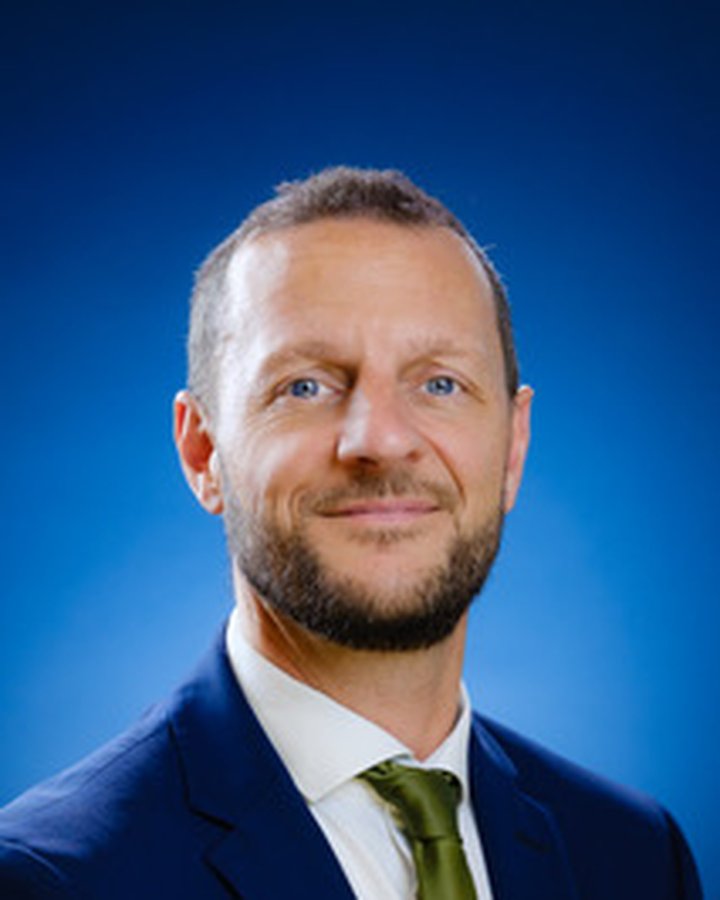
Deputy Head of Secondary · IB Coordinator
“I find education so vital in life. Helping young people realise their potential is an incredibly rewarding way to earn a living.”
“We are THE school that has everything — and above all a warm, happy, inspiring community.”
I am from Liverpool in the north of England. I find education so vital in life. Helping young people realise their potential is an incredibly rewarding way to earn a living.
When I was in Year 12 at school, I started working and volunteering with young people in my spare and extra-curricular time. Then, whilst studying Fine Art, I often worked with children in my summers. Teaching art was the natural step for me to take as a career. After teaching and leading an art department in England for a few years, I wanted to use teaching as an opportunity to travel. I came to Prague in 2011 and never left! I love my job and my life here.
Well, my ‘subject’ now is the whole academic direction of our secondary school. What I enjoy most about that is getting to work with a diverse range of subject mindsets to purposefully and carefully craft an innovative education that is relevant to all of our students.
I am thinking of a particular example where, in my leadership role, being expressly non-judgemental and seeing the bigger picture when a student had made a mistake allowed that student to directly address the mistake rather than hide it. It gave the student the confidence to try again, take risks, and ultimately the opportunity to become the best version of themselves. The student made us both (and their parents) very proud.
We are THE school that has everything: broad and deep curriculum, excellent teachers, outstanding facilities, professional campus standards; and above all a warm, happy, inspiring community.
We never say we lose, we always say we learn. We either win or we learn.

PE Teacher, Kamýk & Libuš · Head of Sports
“Every event, every opportunity is another step on the development ladder. Whether you win, or you lose, you’re still learning.”
“They come back stronger the next tournament because they’ve learned how to lose. So, when they win again, it’s much sweeter.”
I am from Liverpool, England and I am a PE teacher at Kamýk and Libuš and the Head of Sports for the whole school.
The most exciting part of my job is seeing students develop year on year, watching them grow and improve their skills. I also value the opportunity to represent the school across Primary, Middle and High school levels.
My journey started as a football and swimming coach. I became qualified in both and moved to Prague after establishing my own professional football school. I worked alongside Sparta Prague, using their training facilities as a base.
Many students from the school attended my football training camp. The head of the school visited, observed my work, and invited me to join full-time. My sports science degree supported this transition, and I later completed a teaching qualification. I progressed from coaching into teaching, and then into leadership, eventually becoming Head of Sports.
Being part of the sports department is highly fulfilling. I have the opportunity to see students develop from a young age across both campuses, participate in a variety of sports, and progress to competing at high-level tournaments.
Having been here for almost 20 years, I’ve been able to follow students’ journeys from early development through to competing in Prague and across Europe.
One of the most memorable moments this year was with the Under-11 girls’ team. They competed in football and basketball at a tournament in Budapest. They went on to win the entire basketball tournament.
What made this achievement remarkable was that most of the team were primarily football players who were still developing their basketball skills. Despite this, they outperformed all eight schools and won the final. Seeing a team at the early stages of developing a sport achieve such success was incredible.
Students build resilience and get experience from competing. Not just always winning, but they learn from losing as well.
Students are going into a challenging environment where there’s lots of people watching. They are moving from level 1 practice against another school in Prague to a European tournament with 10 international schools coming from all around Europe, including coaches and parents. The atmosphere is very exciting, but it’s very intimidating as well. Students, when they start in the first game, they do become very nervous. But we always say that every opportunity is another learning curve. Whether you win, or you lose, you’re still learning and the different experiences you feel will improve you for the next time. Every event, every opportunity is another step on the development ladder. We never say we lose, we always say we learn. We either win or we learn.
Obviously, the enjoyment is a memory that they’ll never forget. When they win, they take that and it’s like a lasting memory. And the tournaments where we’ve lost, the students seem to come back stronger the next tournament because they’ve learned how to lose. So, when they win again, it’s much sweeter.
I think within the sports programme, PBIS stands out for offering opportunities for all students through its structured sports programme, ensuring every level of ability can develop, compete, and succeed in many sports. Whether the student is starting, developing for the next key stage level, or is reaching for the European tournaments, there’s opportunities for everybody here.
That is one thing that drama does, is build a sense of I’m okay to be me.
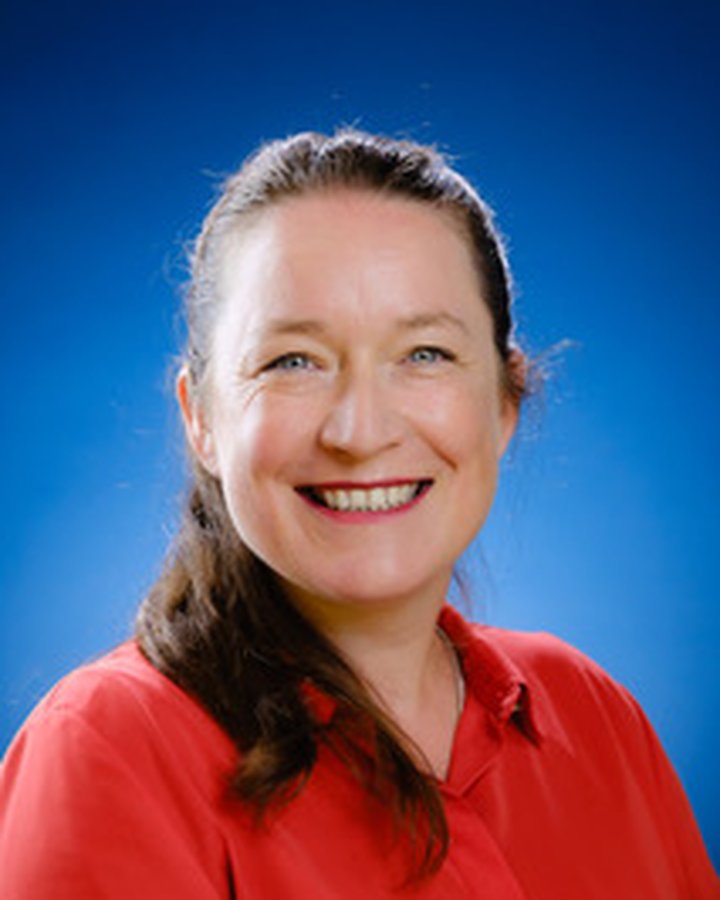
Head of Performing Arts · Drama & Dance
“You have a voice, you have an opinion, you have stories to tell, and that’s an important element of life.”
“One of the most satisfying elements of my job is watching students solve problems themselves — taking off those reins.”
I’m from the south of the UK. I would say 80% of both the curriculum and the stuff that we do beyond the curriculum is creative, and creativity in itself.
One of the most satisfying elements of my job is watching students solve problems themselves. That’s one of the most satisfying and most enjoyable elements of my job – taking off those reins. For example, students ask: how are we going to communicate this? How are we going to stick this piece of scenery to the rolling screen? How are we going to set our stage so that the whole of the audience can see everything? What problems have we got that we need to solve? It is about identifying the problems, working around the problem, and then creating a solution.
So, students become huge problem solvers, they are later very employable.
I have always been a performer. I’ve been on a stage since I was three years old. I started dancing when I was three years old. I studied ballet, tap, modern, jazz, cecchetti, five nights a week, and Saturday mornings. I started teaching dance when I was 12. I wanted to be a ballerina, but I found out I couldn’t do point work. And my drama teacher took me under her wing and said, come to drama.
So, I did IGCSE drama myself. I then went on and did A-level theatre studies and a diploma in drama, then a Higher National Diploma in Performing Arts, then a degree in performing arts, then my postgraduate certificate of education in drama 11 to 18 years at Central School of Speech and Drama in London.
I ended up at PBIS having spent three years in Malaysia, where I was head of performing arts, and PBIS were looking for someone who had BTEC experience. We came over from Malaysia straight to Prague. My husband and I had been to Prague about six years before. We loved Prague. When the job came up in Prague, I was like, oh, there’s a job in Prague.
One of the most satisfying elements of my job is watching students solve problems, transform and grow.
The performing arts develop a child’s mind in a completely different way to any other subject. Any other subject. Drama, music, dance, art. It’s about self-expression. I feel like the arts, you are putting yourself out there, and I think all those opportunities allow a student to feel that they’ve achieved something. There’s an element of achievement, self-satisfaction and growth. Like you can physically feel yourself growing from it.
It’s that growing in confidence, growing in the knowledge that your ideas are good, growing with the idea that you have a voice, you have an opinion, you have things to share with people, you have stories to tell, and that’s an important element of life.
And I think drama matters because here you learn how to express that and be confident with that and be comfortable in yourself. And I think there are so many adults in this world who are not confident in themselves, they’re not comfortable with who they are, and I think that is one thing that drama does, is build a sense of I’m okay to be me.
I had a young man yesterday who is in year 10. We had the whole of year nine sat in the audience, and before he’d even got on stage, they started saying his name. The nerves that must have hit that young man at that point, I feel like that builds up such a moment of, oh my goodness, what if things go wrong. But do you know what? He got up onto that stage and he performed his heart out. He really took them on quite an emotional journey.
And seeing him go through that when I knew that, as soon as they made this initial response, my head went into my hand. I was like, oh no, is he going to get through this? And he did. And it was just amazing. But just that moment where you know that you care so much about something that it doesn’t matter what other people think, and how they’re making you feel, you still get through it and you still give off a really good performance. I think that’s the ultimate outcome in drama.
Another example is a student from Year 13. When she joined, she was very unsure, often doubting whether she can do some things. She took part in IGCSE Drama and the large class gave her a safe space to grow. She started coming into her own and eventually, through theatre, through her IB, she really started to grow. In her solo performance she created a dance and I had no idea she had this amazing dance style, because she had always been fixed to a drama script. She focused on her favourite artist, did this amazing research, and produced this piece of dance. At the end of it, I was just like, wow. She performed with so much confidence. To have seen her on that journey, it’s just been amazing.
I think the arts are well respected here, and senior management are very supportive. They completely trust my creative process, and that trust allows me that creative openness and to give opportunity for students to do something different and not just your normal run-of-the-mill stuff all the time.
Have a question?
The difference is not that PBIS offers “something extra,” but in how consistently it does the basics right. PBIS stands out in particular for:
Because “traditional” isn’t enough for the 21st century. We trade rote memorisation for critical thinking and passive learning for active leadership.
English is the primary language we use when communicating with students and families. Not sure about your current English level? Take our English assessment here to find out.
PBIS emphasises transferable skills:
Thanks to the British curriculum, transitions to other international schools or universities are smoother than is common in local systems.
We don’t believe in limits. We believe in potential.
The admissions process starts with our warm and welcoming admissions team, who will guide you through the application stages.
No, there isn’t an entrance exam. However, every student who joins us in Year 7 and above will either sit a language assessment (non-native English speakers) or a maths and literature assessment (native English speakers).
Students who want to join our International Baccalaureate Diploma Programme (IBDP) in Year 12 will need to have passed their IGCSE exams (or equivalent).
We place students in the appropriate year group according to their age, which is the same as the UK system. This means that children aged five (before the academic year starts) join us in Year 1, children aged six join us in Year 2, and so on.
Children enrolling on our Czech bilingual programme are expected to start in Year 1. This is the equivalent of a ‘preparatory class’ in the Czech system.
If your child is joining us from a different educational system, we’ll make a recommendation based on the information you provide, including recent school reports. Decisions are based on what we believe to be in the best interests of each child.
We’re committed to academic excellence and personalised learning, which is why our students follow a structured blend of British and international curricula. This includes Cambridge IGCSEs and the International Baccalaureate Diploma Programme (IBDP), which provide respected pathways to outstanding higher education across the globe.
There isn’t a right or wrong answer to this question. All the children on our bilingual programme are Czech; however, there are also Czech students who follow our standard primary curriculum. It depends how you want your child to be educated. Our admissions team and Head of Primary can talk you through your choices.
Our early years children (ages 3–5) learn in an average class size of 16. At primary (ages 5–11), our students study in a class of 22. And at secondary level (11–18), the average class size is 16–20.
All our outstanding teachers are from native English-speaking countries. The vast majority are from the UK; however, we also have staff from Canada, USA, Australia, and New Zealand. Our specialist language teachers are also native speakers.
We’re incredibly proud of our exceptional teaching standards. Our highly qualified team have a wealth of experience, gained both in the UK and overseas. They all hold UK teacher status or equivalent, and many have a Master’s degree.
To ensure quality, our teachers are regularly assessed against local and national benchmarks, as well as Nord Anglia’s stringent Quality Assurance Framework.
Yes! Our expert English as an Additional Language (EAL) team will help your child. Each child is unique and our team will support them on their language journey, helping them to gain the confidence they need to access our curriculum.
Our tuition fees reflect the quality of our teaching and learning, the breadth of enrichment experiences we offer, and the success our students achieve.
The fees you’ll pay will cover not only your child’s academic tuition, but also many core elements of school life. These include exciting global learning experiences through Nord Anglia Education, such as our pioneering collaborations with MIT, The Juilliard School, and UNICEF, as well as many of our extra-curricular activities. These will enrich your child’s education, both in and beyond the classroom.
We offer a tuition fee discount to families who enrol more than one child. This is 5% for your second child and 10% for your third and any subsequent children.
Our vibrant international community is home to children and families from more than 60 countries.
You can find key term, holiday, and event dates on our school calendar.
Our admissions team will email you all the details once we’ve received your application. Your child’s school uniform and PE kit will be delivered within a few days of placing an order.
Yes, we provide a safe and efficient bus service, which covers all of our campuses.
No, we don’t have accommodation or boarding facilities at PBIS.
Send it to us directly and a member of our admissions team will get back to you.
Find us in Prague
PBIS is one school community spread across Prague. Every campus is an inclusive, nurturing environment with modern sports facilities, artistic spaces and technology-filled labs and libraries. A fourth campus is on the way.
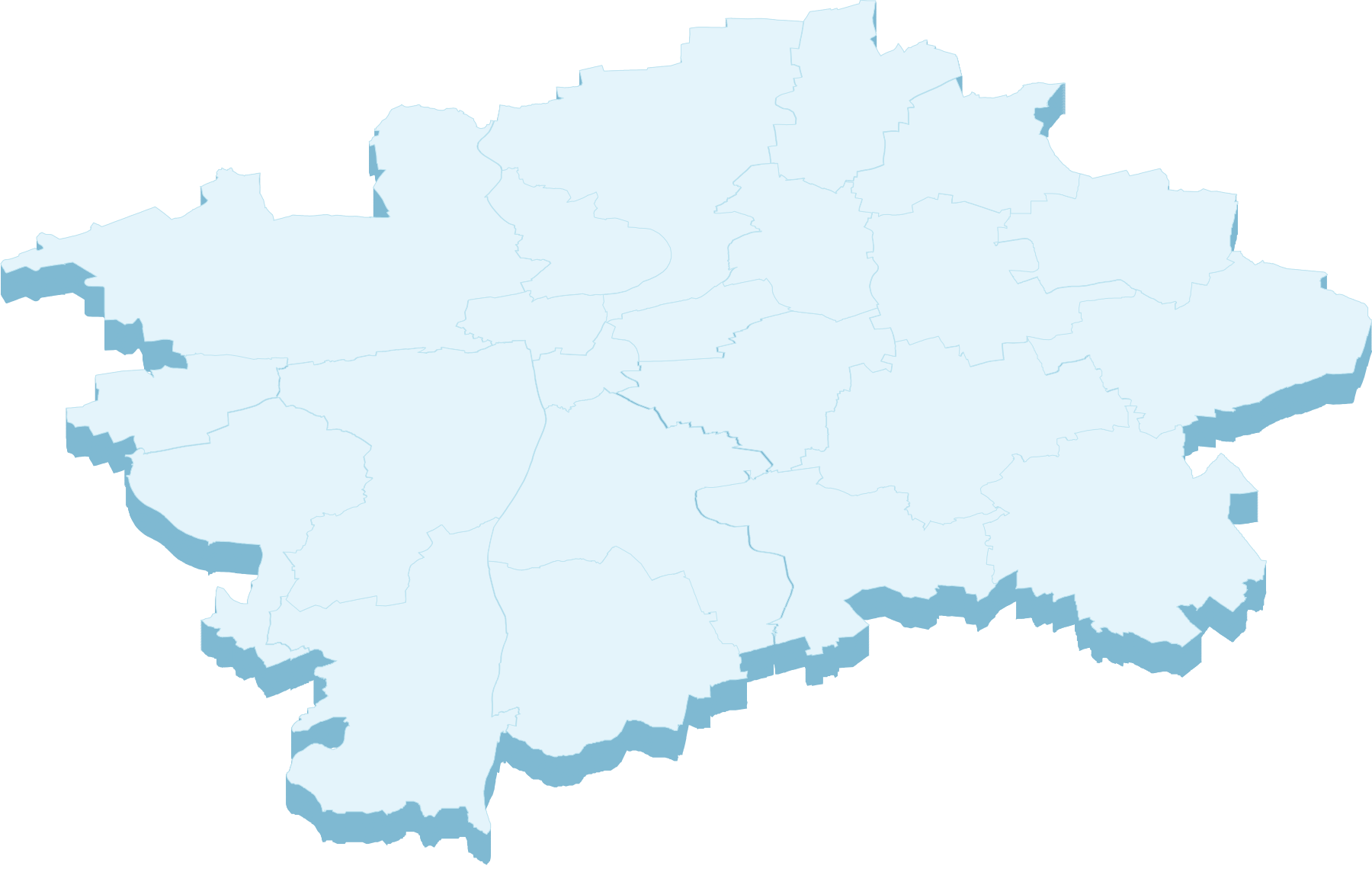 VLASTINA
PROKOP · 2027
KAMÝK
LIBUŠ
Three campuses · one school community
Join our mailing list and we will keep you up to date with newsletters, events and announcements from our family of 80+ premium schools.
Thank you, you are on the list.
We (the “School”, “we”, “our” or “us”) are committed to protecting and respecting your privacy. This Privacy Policy explains how we collect, use, store and disclose personal data about individuals in accordance with the UK General Data Protection Regulation (UK GDPR), the EU GDPR (as applicable), and the Data Protection Act 2018.
This Policy applies to all personal data processed by or on behalf of the School, including data collected through our website, in writing, by telephone, or in person.
The School is the data controller responsible for your personal data. Our contact details and those of our Data Protection Officer (DPO) are provided at the end of this Policy.
We may collect and process the following categories of personal data:
We process personal data for a range of legitimate purposes, including:
Where required by law, we rely on one or more lawful bases for processing, including: contract performance, legal obligation, legitimate interests, consent (where applicable), and protection of vital interests.
We may share personal data with:
Where data is transferred outside the UK or the European Economic Area (EEA), appropriate safeguards are in place to protect your personal data.
We implement appropriate technical and organisational measures to safeguard personal data against unauthorised access, loss or damage. Personal data is retained only for as long as necessary for the purposes for which it was collected and in accordance with legal and regulatory requirements.
Under GDPR, you have the right to:
If you wish to exercise any of these rights, please contact the School’s DPO using the details below.
Our website uses cookies and similar technologies to improve functionality and user experience. You can manage your cookie preferences through the cookie consent settings provided on our website.
We may update this Privacy Policy from time to time to reflect changes in the law or our data practices. The latest version will always be published on our website.
Prague British International School, s.r.o.
K Lesu 558/2, 142 00 Praha 4 – Kamýk, Czech Republic
Company ID (IČO): 27653048
Tel: +420 226 096 200
General Email: info@pbis.cz
Admissions Email: admissions@pbis.cz
Website: www.nordangliaeducation.com/pbis-prague
Email: privacy@pbis.cz
(Note: This is the contact address listed for the DPO role in the official policy.)
• For Czech Republic (EEA): The Office for Personal Data Protection
• For UK (if applicable): Information Commissioner’s Office (ICO)
If you wish to exercise any data protection rights — including requests for access, correction, deletion, restriction, objection or data portability — or if you have any questions regarding this Privacy Policy or the processing of your personal data, please contact the School’s Data Protection Officer at the email address above.